

How to Cast a Baitcast Reel Without Backlash
May 13, 2026

Mythology stories are enduring tales that help people explain the world, understand human nature, and pass down cultural values. Nearly every civilization has them. These stories introduce gods, heroes, monsters, and epic struggles that still shape books, films, art, and even everyday expressions. If you want to explore famous mythology stories from different cultures, this guide offers a clear and beginner-friendly look at where they come from, what they mean, and why they still matter.
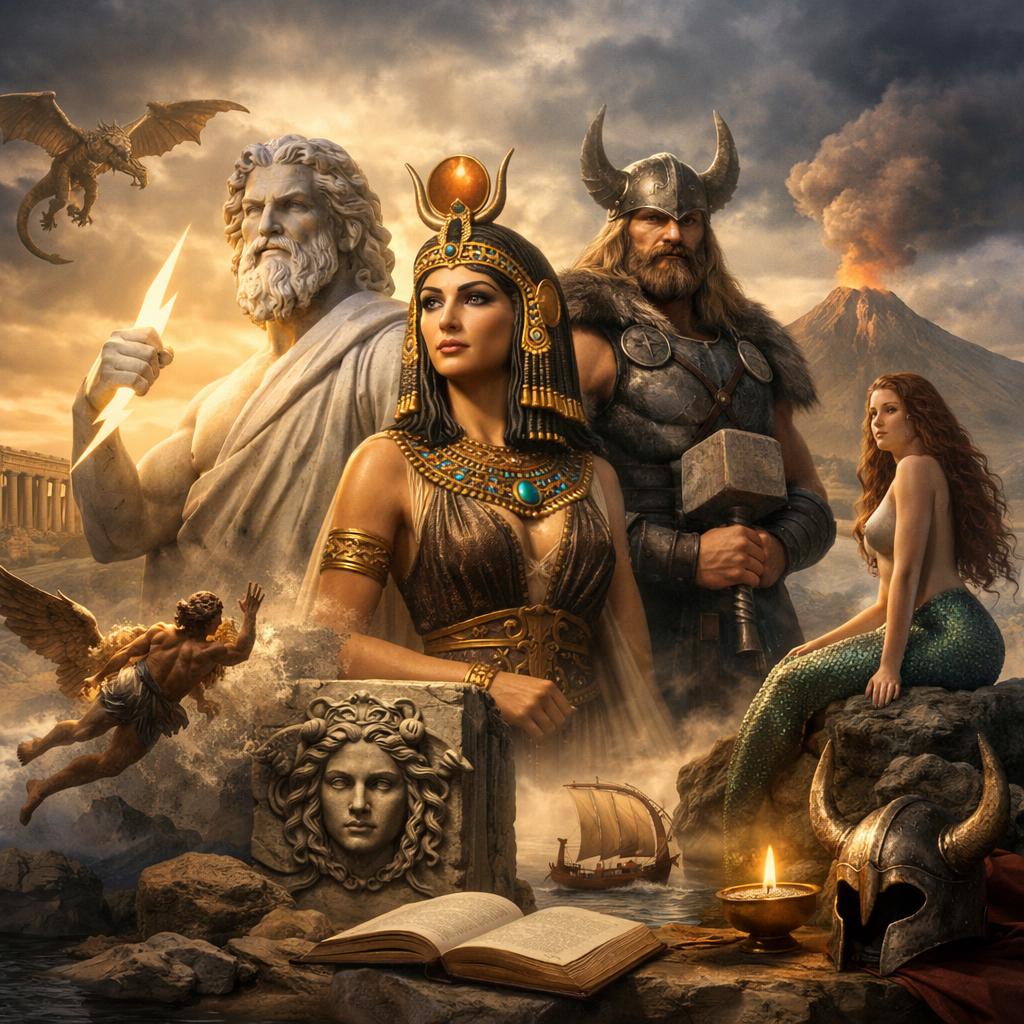
Mythology stories are traditional narratives used to make sense of creation, nature, life, death, morality, and the unknown. They are more than simple entertainment. Myths often carry symbolic meaning and reflect what a culture fears, honors, or hopes for. That is why mythology stories and their meanings still matter in education, storytelling, and popular culture.
They remain relevant because they ask timeless questions. Why do people suffer? What defines a hero? What happens when power goes too far? Myths explore these ideas through vivid characters and dramatic events, which makes them easy to remember and meaningful across generations.
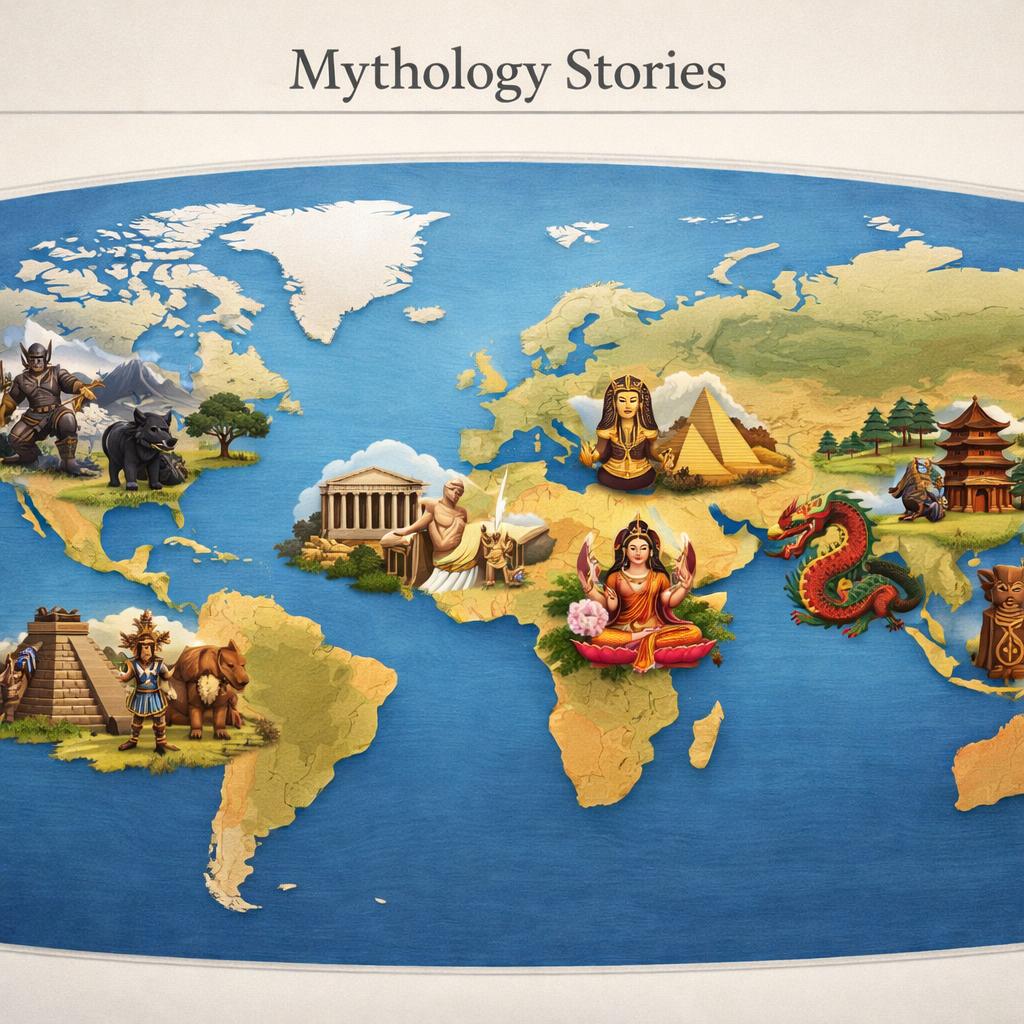
There are many kinds of mythology stories, but a few traditions stand out for their memorable characters and lasting influence.
Greek myths are often the easiest starting point for beginners because they are so widely referenced. Stories about Zeus, Athena, Hercules, Perseus, and Odysseus explore pride, courage, love, revenge, and fate. The story of Icarus, for instance, still serves as a warning about ambition without wisdom.
Norse myths are driven by struggle, honor, and destiny. Odin sacrifices for wisdom, Thor fights giants, and Loki brings both wit and disorder. Many Norse mythology stories move toward Ragnarok, the destruction and rebirth of the world, reflecting a powerful belief in fate and endurance.
Egyptian myths often focus on creation, divine rule, and life after death. Stories of Osiris, Isis, Horus, and Ra reveal a worldview centered on balance and order. The death and rebirth of Osiris is one of the most influential mythology stories, helping explain ancient Egyptian beliefs about the soul and the afterlife.
Hindu mythology includes vast, symbolic narratives from texts such as the Ramayana and Mahabharata. These stories explore duty, devotion, justice, and cosmic order. Figures like Rama, Sita, Arjuna, and Krishna continue to inspire readers with lessons about right action, loyalty, and inner strength.
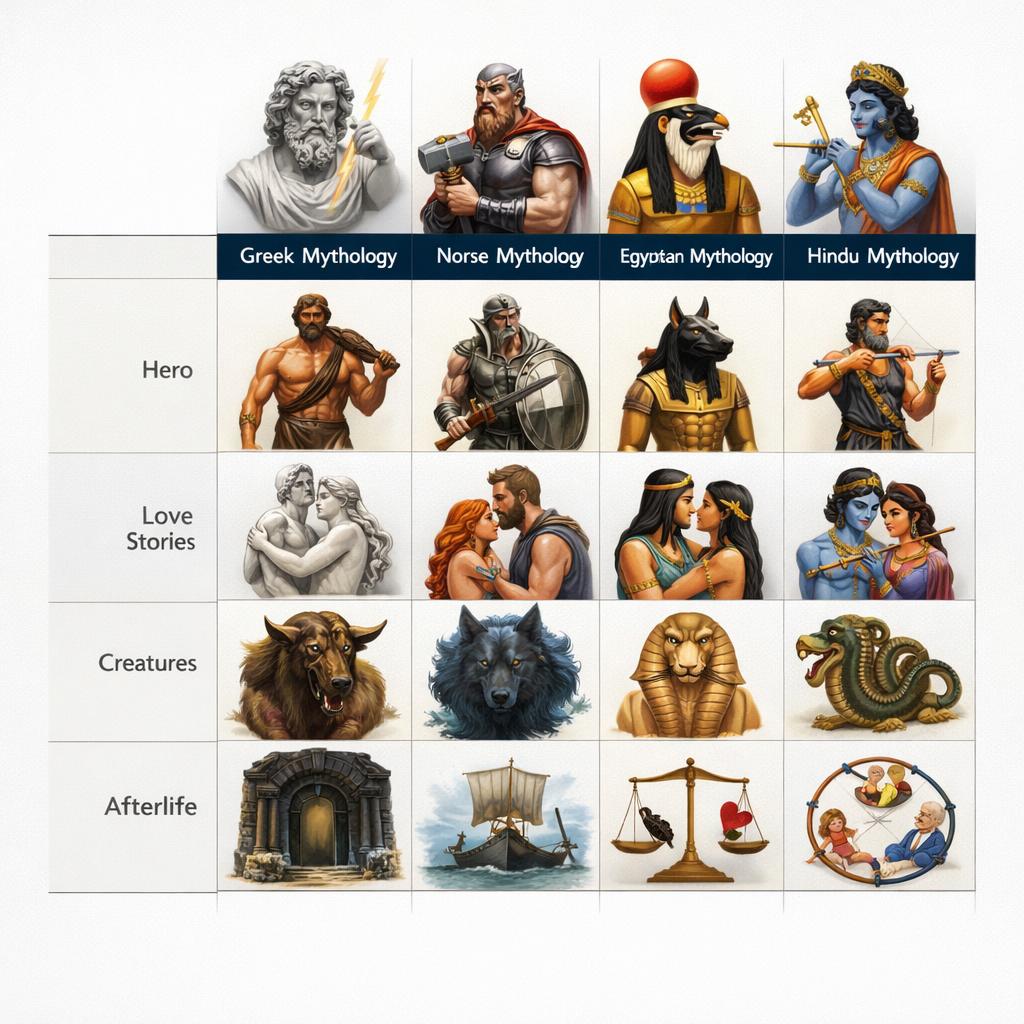
Although cultures differ, many mythology stories return to similar ideas:
These familiar patterns help explain why myths from distant cultures can still feel surprisingly close and relevant.

If you are new to mythology, begin with short, well-known tales before moving into larger epics. Greek myths are often the most accessible, but comparing stories from different cultures can also be rewarding. It helps readers notice both shared themes and unique beliefs. You can also focus on one topic, such as creation myths, trickster figures, or underworld journeys, to make mythology stories easier to follow and compare.
Reading with a theme in mind often makes the experience more enjoyable. It turns ancient stories into a conversation about human questions that still matter today.
Mythology stories last because they combine imagination with insight. They entertain, but they also invite people to think about identity, fear, hope, morality, and the mysteries of life. Whether you start with Greek heroes, Norse gods, Egyptian deities, or Hindu epics, mythology stories offer a rich way to discover both ancient cultures and timeless human concerns.
Mythology stories are traditional tales about gods, heroes, origins, and supernatural events that express a culture's beliefs, values, and worldview.
Some of the best-known mythology stories include the adventures of Hercules and Odysseus, the Norse tales of Thor and Ragnarok, the Egyptian story of Osiris and Isis, and the Hindu epics Ramayana and Mahabharata.
They remain important because they preserve cultural memory, teach lasting lessons, and continue to influence literature, art, film, and modern storytelling.
This author has not provided a bio yet.
May 13, 2026

May 13, 2026

May 12, 2026